Showing posts with label Sub-creations. Show all posts
Showing posts with label Sub-creations. Show all posts
Friday, October 27, 2017
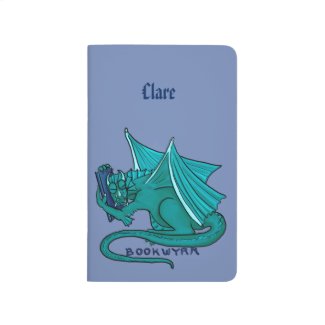
Nerdy Stuff! Bookwyrms, the Real “Bookworms”
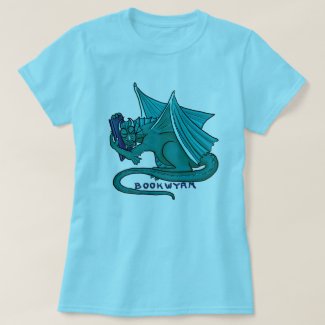
Get this t-shirt here: https://www.zazzle.com/the_bookwyrm
Or a customizable pocket notebook!: https://www.zazzle.com/bookwyrm_book_hug_pocket_notebook-256345857080054137?rf=238087952137083455

Wednesday, September 16, 2015
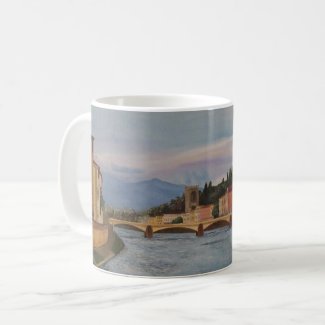
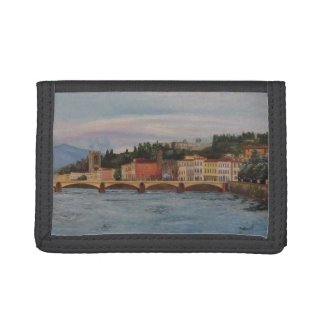
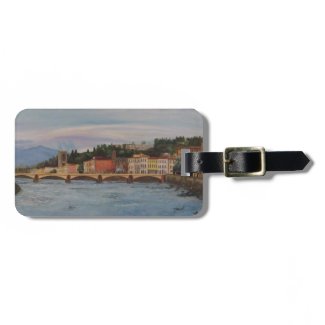
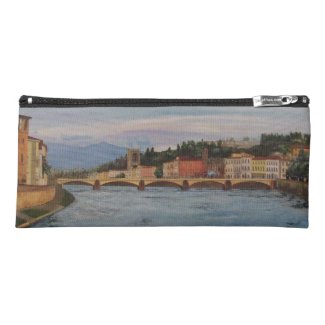
The Life of an Oil Painting
Spring 2010 on the Arno
2' x 4' oil on canvas
Session 1: Sky background complete, some layout of colors

Session 2: More blocking in of colors

Session 3: Detail work on left side

Session 4: Some detail work moving to the right side

Session 5: Some corrections to the original buildings sketch, plus work on trees

Session 6: Completed bridge

Session 7: Completed river

Session 8: Finished glazing for shadows, depth, and color

Finally, finished and framed!
(Framed by Hobby Lobby)

And now for sale for a little travel escapism!
Sunday, October 27, 2013
Tiny Gardening for Red-Eyed Crocodile Skinks
It all started when my husband and I decided we would adopt these two vicious little dragons:
 Smaug and Nessie, a male and female red-eyed crocodile skink pair (Triblonotus gracilis). I wasn't as keen on the idea of keeping those of the reptilian sort in my home, but my husband persuaded me by giving me free reign to build the terrarium I've always wanted for them to live in. After many trips to the pet store and florist shops, I came up with this set up:

The terrarium is a 36" x 18" x 16" Tetrafauna brand reptile habitat with top opening screens and front-opening glass sliding doors. Due to excessive air flow, we partially covered the screen tops with plexiglass panels to keep in moisture and increase humidity levels. For heating and lighting, we chose a 36" Exo Terra hood lamp that has places for four bulbs and two light switches. We put low wattage UVB lights on either end (they go with one switch) and two low wattage heat lamps in the center (on the other light switch), so we can easily turn them off and on for day or night. We added an additional heat pad on the back side of the tank (the substrate layers are too thick to make it effective on the bottom of the terrarium, where it is usually placed) on the left end to help create more of a temperature gradient for our tropical inhabitants.
The terrarium also has a drainage hole at the bottom right (the side on which we keep the water sources), which we've been allowing to drain continuously. A layer of water always stays in the drainage layer, so only excess water seems to drain out. We used large aquarium pebbles over the bottom for the drainage layer, then added a double layer of outdoor bedding liner to separate the drainage layer from the substrate. We mixed substrates to include bark and added a few pebbles, too (croc skinks are, indeed, burrowers). Lastly, we added a thin layer of sphagnum moss over most of the substrate to vary the "terrain" and finish off the look. The moss also keeps up the moisture levels, as it holds a lot of water.


 This has since become the perfect burrowing location for Smaug (as shown on left), who has since renovated and made the gap between the cork bark log and back of the tank his new doorway. (Can you find him?)
You can also see the sheet of coconut fiber (meant for a hermit crab cage, I believe) I hung across the back of the terrarium to create a more natural-looking background--and functional! The tribbies do like to climb, and they can easily navigate the course fibers with their sharp little claws. To give it a more finished look, I cut slits into the fiber sheet in order to attach sphagnum moss at various intervals. Most of the moss has since been torn down by curious climbing lizards, but the coconut fiber itself still provides a nice background visually, almost looking like a cliff face with the castle for perspective.
In the pictures, the inescapable mealworm dish is also visible. We chose this method to keep track of the food better than if we left the lizards hunt for it. This way, we can just refill it every time it is empty and let them eat when they want to. So far, they have been emptying it every couple of days, which seems to be normal.
Lastly, we added two water sources. One is for soaking, the other for drinking and providing humidity. We decided to go with a large reptile soaking dish so that it would have enough surface area. However, it is slightly deeper than it needs to be, so we layered the bottom with pebbles (larger rocks around the outsides) to prevent the lizard from drowning and to help them climb out again. The water needs to be changed and the dish cleaned every few days. For appearances, and for ease of access for the lizards, we sunk the dish in the substrate so that it sits on the bedding liner. In order to disturb the plants and substrate near the dish as little as possible every time we need to remove it for cleaning, we created a sheath for the dish with thick plastic sheeting and duct tape. This holds the substrate back when we take the dish out and helps to hold everything in place.
We purchased the medium-sized Exo Terra waterfall, which has a space for the optional fogger. The waterfall construction and pump keeps the water clean for the tribbies to drink. We use Aquasafe and Biotize in the water (in both locations) especially to keep a slimy layer from forming on the waterfall. The fogger does help with keeping moisture levels up on a regular basis in the vivarium, since we are not able to spray it down frequently enough; however, I still find that a regular misting seems necessary for the plants and humidity--especially on the opposite side of the terrarium. The fogger is fickle at best, often requires replacement parts, but has so far been the best option for our vivarium setup since we have the waterfall it goes with. The waterfall pump is pretty stable, but occasionally needs to be cleaned out if dirt or substrate goes into the basin and clogs it. So far it has always worked after cleaning. The tribbies appear to like it. We've seen them climbing on the waterfall and once even found them up inside of it! We have since remedied that problem with a little plumbers putty to keep the various pieces of the waterfall sitting securely in place.
After arranging everything, I found there was still room for a few more plants, had I wanted them, but decided to save the remaining open spaces for the enjoyment of the little dragons--not that they're bold enough to use them much, but after more time, perhaps they will get more comfortable with us!
As it turns out, I have become quite attached to our little dragons and have striven to make the vivarium as comfortable as possible for them.
The terrarium is a 36" x 18" x 16" Tetrafauna brand reptile habitat with top opening screens and front-opening glass sliding doors. Due to excessive air flow, we partially covered the screen tops with plexiglass panels to keep in moisture and increase humidity levels. For heating and lighting, we chose a 36" Exo Terra hood lamp that has places for four bulbs and two light switches. We put low wattage UVB lights on either end (they go with one switch) and two low wattage heat lamps in the center (on the other light switch), so we can easily turn them off and on for day or night. We added an additional heat pad on the back side of the tank (the substrate layers are too thick to make it effective on the bottom of the terrarium, where it is usually placed) on the left end to help create more of a temperature gradient for our tropical inhabitants.
The terrarium also has a drainage hole at the bottom right (the side on which we keep the water sources), which we've been allowing to drain continuously. A layer of water always stays in the drainage layer, so only excess water seems to drain out. We used large aquarium pebbles over the bottom for the drainage layer, then added a double layer of outdoor bedding liner to separate the drainage layer from the substrate. We mixed substrates to include bark and added a few pebbles, too (croc skinks are, indeed, burrowers). Lastly, we added a thin layer of sphagnum moss over most of the substrate to vary the "terrain" and finish off the look. The moss also keeps up the moisture levels, as it holds a lot of water.
As tropical lizards, the "tribbies" provided me with the chance to keep plants normally reluctant to thrive even indoors in the dry winter conditions of Minnesota. I grabbed a variety of terrarium-friendly tropical plants, as tribbies don't seem to disturb them much or attempt to eat them, being insectivorous. After a good initial soak, most of the plants have so far done well with a regular misting. Tribbies also need a lot of hiding places, the shy creatures that they are, so I chose a mix of foliage that would also give them some "cover" when they move about the vivarium.
For the decor and tribbie playground items, we chose to theme the vivarium on the medieval/fairytale castle tropes after the tribbies' dragon-like looks. For an extra hide, we chose a gray rock-shaped hide (the most different from the more common tans of desert terrarium pieces) that we can move about the vivarium, a half-log turtle hut to give the lizards some cover in the soaking dish and provide another climbing opportunity, and some larger rocks to place randomly. I purchased a large aquarium castle to be the centerpiece. To make it look a natural part of the vivarium, the castle was set directly on the bedding liner before filling it in with substrate. This worked well as the substrate filled in around the various rock formations and protrusions that make up the castle's base. After filling the inside with substrate and moss as well, it has become a favorite hide for Nessie. The castle itself also provides a lot of nooks and crannies, in the base and up inside the turrets where she likes to climb.
I also employed cork rounds as planters to create different levels and more climbing and hiding opportunities for the lizards. Evidence in my front-most cork round suggests a tribbie tried to burrow into it from the top, but must have decided it was an inadequately hidden nest and has since left it alone. Thankfully, most of my plant in that round survived. I also used a flat log piece of cork bark (after first making the mistake of getting a grapewood log--they mold immediately in a damp environment) across the back left corner to bank up the substrate behind and create another planting level (on top of which is my other cork round planter).
This has since become the perfect burrowing location for Smaug (as shown on left), who has since renovated and made the gap between the cork bark log and back of the tank his new doorway. (Can you find him?)You can also see the sheet of coconut fiber (meant for a hermit crab cage, I believe) I hung across the back of the terrarium to create a more natural-looking background--and functional! The tribbies do like to climb, and they can easily navigate the course fibers with their sharp little claws. To give it a more finished look, I cut slits into the fiber sheet in order to attach sphagnum moss at various intervals. Most of the moss has since been torn down by curious climbing lizards, but the coconut fiber itself still provides a nice background visually, almost looking like a cliff face with the castle for perspective.
In the pictures, the inescapable mealworm dish is also visible. We chose this method to keep track of the food better than if we left the lizards hunt for it. This way, we can just refill it every time it is empty and let them eat when they want to. So far, they have been emptying it every couple of days, which seems to be normal.
Lastly, we added two water sources. One is for soaking, the other for drinking and providing humidity. We decided to go with a large reptile soaking dish so that it would have enough surface area. However, it is slightly deeper than it needs to be, so we layered the bottom with pebbles (larger rocks around the outsides) to prevent the lizard from drowning and to help them climb out again. The water needs to be changed and the dish cleaned every few days. For appearances, and for ease of access for the lizards, we sunk the dish in the substrate so that it sits on the bedding liner. In order to disturb the plants and substrate near the dish as little as possible every time we need to remove it for cleaning, we created a sheath for the dish with thick plastic sheeting and duct tape. This holds the substrate back when we take the dish out and helps to hold everything in place.
We purchased the medium-sized Exo Terra waterfall, which has a space for the optional fogger. The waterfall construction and pump keeps the water clean for the tribbies to drink. We use Aquasafe and Biotize in the water (in both locations) especially to keep a slimy layer from forming on the waterfall. The fogger does help with keeping moisture levels up on a regular basis in the vivarium, since we are not able to spray it down frequently enough; however, I still find that a regular misting seems necessary for the plants and humidity--especially on the opposite side of the terrarium. The fogger is fickle at best, often requires replacement parts, but has so far been the best option for our vivarium setup since we have the waterfall it goes with. The waterfall pump is pretty stable, but occasionally needs to be cleaned out if dirt or substrate goes into the basin and clogs it. So far it has always worked after cleaning. The tribbies appear to like it. We've seen them climbing on the waterfall and once even found them up inside of it! We have since remedied that problem with a little plumbers putty to keep the various pieces of the waterfall sitting securely in place.
 |
| Smaug peeking out of his newly renovated home dug out behind the log. |
After arranging everything, I found there was still room for a few more plants, had I wanted them, but decided to save the remaining open spaces for the enjoyment of the little dragons--not that they're bold enough to use them much, but after more time, perhaps they will get more comfortable with us!
As it turns out, I have become quite attached to our little dragons and have striven to make the vivarium as comfortable as possible for them.
Saturday, October 26, 2013
A Midsummer Night's Dream: A Theatrical Interpretation
Although this post comes too late for the reading of A Midsummer Night's Dream in the monthly Shakespeare readings I host, I thought I'd still share this theatrical design I once created years ago for the play:

 The idea that is
going to impel every other facet of my production brings in the question of the
nature of art. It makes A Midsummer Night’s Dream more than merely a “dream.”
By handing Puck a paintbrush, all manipulation lies with him. It is still a
dream, but, more definitively, Puck’s dream and creation. I imagine it as his
fantasy about these fool mortals and a parody on his own kind. In this way, the
uncertainty of fantasy (or dream) and reality remains intact—as it is crucial
to Shakespeare’s initial underlying incentive. I still want the audience to be
subtly given that question to be able to think on even after the performance is
over. Yet, I still find the traditional motivations and ideas of the play of
great importance so I was inclined to find a way in which the play would not
lose any of its original splendor. The story stays the same; it is now just
changed to have a defined perspective in order to bring out more clearly the
theme of art I wish to emphasize. I envision the set to be in the style of a
Romantic period oil painting, but keeping a sort of muddled and tangled
illusion. The costumes and characters should also be in this style. This
concept may also introduce a few new ideas about human character in relation to
reality.
The idea that is
going to impel every other facet of my production brings in the question of the
nature of art. It makes A Midsummer Night’s Dream more than merely a “dream.”
By handing Puck a paintbrush, all manipulation lies with him. It is still a
dream, but, more definitively, Puck’s dream and creation. I imagine it as his
fantasy about these fool mortals and a parody on his own kind. In this way, the
uncertainty of fantasy (or dream) and reality remains intact—as it is crucial
to Shakespeare’s initial underlying incentive. I still want the audience to be
subtly given that question to be able to think on even after the performance is
over. Yet, I still find the traditional motivations and ideas of the play of
great importance so I was inclined to find a way in which the play would not
lose any of its original splendor. The story stays the same; it is now just
changed to have a defined perspective in order to bring out more clearly the
theme of art I wish to emphasize. I envision the set to be in the style of a
Romantic period oil painting, but keeping a sort of muddled and tangled
illusion. The costumes and characters should also be in this style. This
concept may also introduce a few new ideas about human character in relation to
reality.

Ultimately,
my production of William Shakespeare’s A Midsummer Night’s Dream is to be
Puck’s masterpiece as he is painting it. This concept emphasizes the nature of
art and gives the play a defined perspective without spoiling the genius work
that already exists. It also motivates humans’ common foolishness and gives the
audience something to thoughtfully consider. This idea makes the fuse of
reality and fantasy more obvious and gives it deeper meaning. With this
concept, A Midsummer Night’s Dream should still be just as enthralling and
whimsical as it was originally meant to be while still adding something new.
A Midsummer
Night’s Dream: Analysis and Justification
William Shakespeare’s A Midsummer
Night’s Dream has been a favorite classic to produce for years. It has a very
fairytale-like quality that enchants its audience and performers alike.
Traditionally, the play is rather aesthetic and, in a way, almost pastoral in
nature. These kinds of pieces tug at the imagination and draw viewers in. They
evoke whimsical emotions and something not quite so different from nostalgia.
This play has given many directors room to play and manipulate the concept
within the script’s bounds. Countless interpretations have been given—from the
extremely bizarre to Shakespeare’s traditional. For my concept of William
Shakespeare’s A Midsummer Night’s Dream, the whole play is to be in Puck’s
imagination as a work of art.
Theatre in itself is art, and A
Midsummer Night’s Dream is one of the most artistic plays. Visually, it is very
involved and generally pleasing to look at. Sets for this play are often
intricate and extensive. The visual aspects for A Midsummer Night’s Dream are
the first to grab my attention. Second is the music that can hold powerful
influence over the undertones of the performance. Then the masterful poetry of
the work alone is artistic and is particularly appealing to me because of its
categorization in the fantasy genre. It is, overall, a playful romance with
humorous mischief and satire, which makes it incredibly endearing.
Puck’s line in act III scene ii,
“Lord, what fools these mortals be!” essentially defines Shakespeare’s main
reason for writing A Midsummer Night’s Dream. The play confronts the difficulties
of love and dreams that humans face, how they treat it (specifically their
unreasonableness), and their stubbornness with which they determine reality
from fantasy. Shakespeare uses it to bring up a question of the actual nature
of art and fantasy—or of the imagination in general. He is able to do this by
using very bold contrasts and the fickle (if rather realistic) run of human
emotions and actions.
A Midsummer
Night’s Dream takes place in Athens and a nearby wood during an interesting
combination of characteristics from the English Renaissance and Ancient Greece.
Shakespeare did something very remarkable with the characters. He seemed to
bring together a mixture from previous literature such as Greek mythology and
English folktales all to interact in one unique plot. Simply, the play tells
the story of the following characters and their issues of love: Theseus and
Hippolyta of Athens and the Amazons; Oberon and Titania of the Fairies; and the
four Athenians, Lysander, Hermia, Demetrius, and Helena. It deals with a
forbidden love, (and that moves the setting to the forest), Fairies disputes,
the wedding preparations for the Duke of Athens and the Queen of the Amazons,
and how one sprite can make a royal mess of it all. Fascinatingly, this particular
play is successful without the usually necessary plot pyramid. Neither does
there really seem to be a true protagonist or antagonist. It just does not seem
to need any to maintain interest and attention. That, in many ways, is a major
feat of this play and makes it easier to see it as an artwork—or painting.
The idea that is
going to impel every other facet of my production brings in the question of the
nature of art. It makes A Midsummer Night’s Dream more than merely a “dream.”
By handing Puck a paintbrush, all manipulation lies with him. It is still a
dream, but, more definitively, Puck’s dream and creation. I imagine it as his
fantasy about these fool mortals and a parody on his own kind. In this way, the
uncertainty of fantasy (or dream) and reality remains intact—as it is crucial
to Shakespeare’s initial underlying incentive. I still want the audience to be
subtly given that question to be able to think on even after the performance is
over. Yet, I still find the traditional motivations and ideas of the play of
great importance so I was inclined to find a way in which the play would not
lose any of its original splendor. The story stays the same; it is now just
changed to have a defined perspective in order to bring out more clearly the
theme of art I wish to emphasize. I envision the set to be in the style of a
Romantic period oil painting, but keeping a sort of muddled and tangled
illusion. The costumes and characters should also be in this style. This
concept may also introduce a few new ideas about human character in relation to
reality.
The audience
should realize from this that though there is a separation of fantasy and
reality, the best choice may not always be to make that distinction in the
context of personal creativity. At the same time on the other end of the
spectrum, they should understand the concept that sometimes humans’ lack of
reason and treatment of events is sometimes as absurd as if a mischievous
sprite were making it up. From the original themes of the play itself, the
audience should still understand the issues it pokes fun at.
Wednesday, October 16, 2013


Friday, May 11, 2012


Subscribe to:
Posts (Atom)